Massage Therapy
Massage Therapy

Lymphatic Drainage Massage
Manual lymphatic drainage, or Lymphatic Drainage (MLD) is a gentle type of massage that stimulates lymph fluid circulation throughout the body.
The lymphatic system helps remove toxins, and improved circulation can help with a number of conditions, including:
- lymphedema
- fibromyalgia
- Edema
- skin disorders
- fatigue
- insomnia
- stress
- digestive problems
- arthritis
- Migraine
Research from 2014 found that lymphatic drainage massage is more effective in improving quality of life for patients with fibromyalgia than connective tissue massage.
A 2021 review of 17 studies found some evidence that MLD in early stages following breast cancer surgery may help prevent progression to clinical lymphedema, though it may not provide any benefit for moderate to severe lymphedema.
If you are suffering from any of these conditions, lymphatic drainage massage should be avoided.
- congestive heart failure
- history of blood clots or stroke
- current infection
- liver problems
- kidney problems
It's possible to perform lymphatic drainage massage on yourself at home, or you can seek out a professional. Before you attempt it, always consult your physician.
These massages usually last 60 minutes or longer.
Gastrointestinal (Digestive) System
Gastrointestinal systems are responsible for digestion, propulsion and absorption of nutrients and food. This system is comprised of the oral cavity, salivary glands, esophagus, stomach, intestines, liver, gall bladder and pancreas. Massage relieves tension in the stomach and intestinal muscles and aids with waste elimination. It also stimulates the liver and kidney activities.
The following massages are beneficial for the digestive system:
- releasing tension in the abdominal muscles
- releasing tension in the intestinal muscles
- Reduce bloat, gas, and cramps
- relieving indigestion
- improving digestion by stimulating peristalsis
- releasing digestive enzymes
- relieving constipation
- assisting with waste elimination
- stimulating liver activity
- stimulating kidney activity
Registers, certifications and licenses
In 2016, 45 states and the District of Columbia regulated massage therapy. Although not all states license massage therapy, they may have regulations at the local level.
In states with massage therapy regulations, workers must get a license or certification before practicing massage therapy. Most states require that students complete a massage therapy program approved and pass an examination.
The exam may be a state-specific exam or the Massage and Bodywork Licensing Examination (MBLEx) licensure exam, offered by the Federation of State Massage Therapy Boards.
Massage therapists also may need to pass a background check, have liability insurance, and be certified in cardiopulmonary resuscitation (CPR). Many states require massage therapists to complete continuing education credits and to renew their license periodically. Those wishing to practice massage therapy should look into legal requirements for the state and locality in which they intend to practice.
Urinary System
Urea is a waste that can be found in blood. The function of the urinary system removes it. The body absorbs nutrients from food intake. Urea is formed when protein-rich foods and certain vegetables are broken down and transported through the bloodstream into the kidneys. While the kidney filters the urine, it also keeps glucose, salts, and minerals in the blood. The filtered urea is then mixed with water, excess salts and organic material to become urine. After the kidneys have processed the urine, the ureter tubes are sent to the bladder. Muscles in the ureter contract and relax to facilitate urine movement into the bladder. The bladder then stores the urine. The body's sphincter muscles keep the urine from leaking until the body is signaled to eliminate it.
Massage therapy activates the urinary system. Fluids in the muscles are pushed into the lymphatic system, which is then filtered and excreted via the urinary system. The massage therapist may encourage clients to consume lots of fluids after a massage to flush out toxins, waste and other debris.
The following massages are beneficial for the urinary tract:
- Aids to increase urinary output
- reduces fluid retention
- Stimulates digestion
- Promotes better waste elimination
- increases the efficiency of the liver
- increases the efficiency of the kidneys
- assists toxins stored in the muscles to be released
Reflexology
Reflexology uses gentle to firm pressure on different pressure points of the feet, hands, and ears. This is a great option for those who want to reduce stress and increase their energy. It's also a good option for those who aren't comfortable being touched on the entire body.
Reflexology may be especially beneficial for:
- relaxation
- Reduced pain
- reduced fatigue
- Better sleep
- Reduced anxiety
- Improved mood
Reflexology was found to significantly reduce anxiety in patients who are undergoing heart surgery, according to a 2018 study.
A 2019 clinical trial found that reflexology could reduce fatigue and pain and improve the quality of sleep in patients with lymphoma.
You can wear loose, comfortable clothing that allows access to your legs.
Apply For State Licensure
After passing the national approved exam you are one step closer towards becoming the licensed massage therapist you desire to become.
So why, exactly, does massage therapy require licensure? The government regulates massage therapy, so licensure permits a person to practice while the public's safety, health and welfare are protected.
Kentucky, Ohio, and Tennessee each require licenses that can be applied for online. Many states require you to renew your license on a regular schedule. Continuing education might also be required.

Meet Continuing Education Requirements
An article on massagetherapylicense.org notes that continuing education as a massage therapist is "an opportunity to tailor your education toward your own career goals...as a massage therapist, you are a health practitioner, and health-related knowledge is ever increasing. People need to be familiar with certain content, such as ethics and legalities.
Continuing education makes you a better massage therapist.
If you take the time and effort to become an Licensed Massage Therapist, continue to challenge yourself throughout your career with additional courses, training and other education.
Integumentary System
The body's skin, including the epidermis and dermis, hair follicles and nails, and the integumentary systems includes the glands. It is 12-15% of our body's largest organ, and accounts for around 15% to 15% of our total weight.
It is the primary function of the integumentary systems to protect the body from its environment. It protects, acts as a sensor receptor and regulates body temperature. The integumentary systems:
- protects the body's organs and tissues by encasing them in a protective skin
- Protects against infections, microorganisms and foreign substances
- Protects from sunburn
- regulates body temperature
- insulates energy
- excretes perspiration
- generates vitamin D
- stores water, fat, glucose and vitamin D
Skin acts as a sensor by sending signals to the brain whenever the skin feels pain, touch or vibration. The body will respond by sending a signal to the brain. The skin's sensory mechanisms, hair follicles and glands act as temperature sensors translating heat and cold while providing the body's reaction through the glands, such as perspiration or sweat.
Massage therapy directly stimulates the skin. Massage assists the integumentary system in the following ways:
- It promotes overall skin health and stimulation
- The stimulation of the sebaceous glands which produces sweat
- Improves skin texture, condition and tone
- Stimulates the sensory receptors
- enhances tissue repair
- removes dead skin
- moisturizes skin

Aromatherapy Massage
Aromatherapy massages are best for people who enjoy scent and want to have an emotional healing component to their massage. You can benefit from this type of massage:
- Boost your mood
- Reduce stress and anxiety
- Reduce symptoms of depression
- relieve muscle tension
- Reduce pain
Aromatherapy massages use essential oils and soft pressure. Although your massage therapist will typically decide what essential oils to use for you, you are free to tell them if you prefer. Before essential oils can be applied to skin, they must first be dilute.
You'll receive a massage on your entire body, while you inhale essential oils from a diffuser. The oil will then be absorbed through the skin.
Aromatherapy massages may only be given to your head, back and shoulders. You won't wear any clothing, but underwear is optional.
Lymphatic system
Lymphatic system refers to a collection of organs and tissues that includes the lymph and lymph nodes. The vessels carry fluid around the body. It helps to balance the body's fluids and protects against infections, germs, disease, sickness, and other illnesses. It is an essential component of our immune system.
Three main functions of the lymphatic system are:
- lymphatic vessels that carry lymph (clear fluid) which absorbs fluid, waste products, dead cells, bacteria, virus, fats, and proteins from tissues
- lymph nodes found in the neck, armpits, and groin filter and remove damaging agents (infection, bacteria, cancer cells) with infection-fighting white blood cells
- The lymphatic system absorbs the fat-soluble vitamins and other fats from the digestive tract.
The lymphatic system includes the bone marrow and tonsils as well as the tonsils and adenoids. The lymphatic system is stimulated by a lymph massage. It encourages fluid drainage in the direction to the lymphatic flow.
Massage assists the lymphatic system in the following ways:
- reducing swelling
- reducing inflammation
- Sinus congestion can be relieved
- Scar tissue reduction
- stimulating circulation
- rehabilitating post-injury
- Rehabilitation after surgery
- complementing some forms of cancer treatments
The Peripheral Nervous System (Pns)
The peripheral nervous system resides outside of the brain and spinal column and consists of nerves and ganglia (groups of nerve cells) that connect the central nervous system to organs, muscles, blood vessels and glands. The peripheral nervous system has two main components: the sensory nervous cells and the motor nervous cells. Sensory nervous cells detect environmental conditions and relay that information to the CNS. The CNS then interprets that data and reacts via the PNS' motor nerve cells. This information is carried to various organs, glands, and muscles to allow them to adapt to their environment. There are two types of motor nerve cells: voluntary and involuntary muscles movement, and activities that either increase or decrease energy expenditure.
- The brain is connected to the outside environment through the sensor-somatic nervous systems. Monitoring and regulating voluntary environmental conditions, including keeping the body connected to its environment via the senses of touch, smell and taste.
- Autonomic nervous system (ANS) - connects the brain with internal organs and glands. Monitors and regulates involuntary conditions in internal body functions, including digestion, heart function, blood flow, and gland activity.
- The parasympathetic nervous systems - is responsible for the regulation of internal organs and glands (salivation and tears), urination and digestion, as well as defecation. The parasympathetic nervous system consists of the nerves or glands of the eye, nasal cavity, face, ear, esophagus, pancreas, kidneys, liver, gall bladder, and stomach.
- The fight-or flight response is a result of stress. The system increases heart rate and dilates the bronchial passages. It also constricts blood vessels. Increases esophus peristalsis. This causes dilation in the pupils. Signals goose bumps. Regulates sweat levels. Hot, cold, and pain sensations are carried by the sympathetic nervous system.
- The enteric nervous system (ENS) secretes enzymes like acetylcholine, dopamine, and serotonin. These are responsible for controlling emotions such as pleasure, pain, and sexual desire. It influences digestion by secreting enzymes and monitoring the pressure. This system also has an impact on sexual performance.
The following massages are beneficial for the nervous system:
- Heart rate is decreasing
- Lowering blood pressure
- constricting pupils
- Stimulating blood flow
- regulating digestion
- reducing inflammation
- enhancing release of endorphins
- Regulating mood
- Dopamine can be used to influence movement and emotional reactions such as pleasure or pain.
- stimulating the senses (touch, hear, smell, see, and feel)
- Assisting digestion and secretions
- Assisting body functions, including respiration, sweat, and temperature
How To Become A Massage Therapist
Make sure this career aligns with your career expectations and goals.
Although the role of massage therapist is varied depending on what specialty you choose, it will be a close-knit job. You'll work closely with patients to learn their histories and provide guidance regarding posture, relaxation, sleeping, strength and sleep. Your salary as a massage therapist may vary depending on where you live and the type of specialty massage work you do. The hours that you work are a major factor in the success of massage therapists working for their own clients. Your hourly rate will vary depending on how many clients you have.
Find a program that meets your state's requirements.
Every state has its own set of professional guidelines. Find out the requirements for your state before you start a program.
Enroll and complete the program.
To become a masseuse, you don't have to hold a degree for more than two or four years. After 500-1000 hours of training, most massage therapy programs offer a certificate or diploma.
Get licensed or certified.
Nearly all states require massage therapists to be licensed before practicing. Many follow up their licensing with voluntary board certification through the National Certification Board for Therapeutic Massage and Bodywork (NCBTMB).
Get practical experience.
Once you have your license in hand, start working in the field. Although your workplace might vary, many massage therapists work at spas, gyms, hospitals, doctors' offices and in the homes of patients. Some open their own salons. You'll discover what kind of workplace you prefer and which type of massage works best for you as you get experience.
Consider earning additional specialty certifications to increase your potential.
While your basic education in massage therapy will be useful for most jobs, you might want to pursue a specialization certificate to help you specialize in sports massage and palliative care.
Skeletal System
The skeletal system is the body's structure that protects the body's internal organs and soft tissue. For instance, the skull protects the brain, the sternum and rib cage protects the heart and lungs, and the vertebral column protects the spine. The skeletal system works closely with the muscular system to provide body movement and stability. Muscles attach to the bone in a manner that allows a person to have control over their posture and their movements, such as walking, standing, sitting, and crawling. An individual is born with 300 bones. However, by the age of adulthood, they will have 206 bones. This happens because some bones are merged or grown together. The human body has four kinds of bones:
- short bones
- long bones
- flat bones
- irregular bones
The skeletal system is composed of:
- bones - the framework of the human skeleton
- Ligaments - The connective tissue between two bones called ligaments
- joints - the mechanical support for two or more bones to connect to allow motion
- tendons - the tissue where muscle attaches to the bone
- cartilage - connective tissue found in joints and support tissue that cannot rejuvenate and does not contain blood vessels
- bone marrow - flexible tissue located in the interior of the bone where blood cells are produced
Massage assists the skeletal system in the following ways:
- improves posture
- Facilitates body alignment
- improves stiff joints
- Reduces inflammation
- increases range of motion
- relaxes tight muscles and tendons
- Reduces fatigue and soreness
- Increases flexibility
- reduces the number of and intensity of muscle spasms
- improves muscle tone
- facilitates mineral retention
Massage is also thought to assist during the injury healing phase, some injuries that may benefit from massage are:
- muscle strains
- Tendinitis
- arthritis
- fractures
- ligament sprains
It Improves Sleep
Massage can promote restful sleep and help those with limited mobility. "Massage promotes relaxation and sleep in those undergoing chemo or radiation therapy," says Lisa Marie de Miranda, registered massage therapist and kinesiologist at Beverly Physiotherapy. Also, massages help infants sleep more, cry less and be less stressed, according to research from the University of Warwick.
"Most RMTs can do infant massage," says de Miranda. And if parents want to do it themselves, it comes naturally. "There's not really a particular technique. Whatever parents normally do to soothe their baby will be effective."
What Courses Do You Take To Become A Massage Therapist?
Course requirements will vary from one school to another. The NWHSU massage therapy program includes four main components.
- Classroom coursework in biological sciences. Subjects like anatomy, physiology, pathology, and nutrition provide students an overview of the human body and how it works.
- Coursework in the classroom on topics related to massage. Students are prepared for professional practice by learning about law, management, ethics and communication.
- Lab courses for hands-on assessment and treatment techniques. These courses instruct students on how to tailor massage treatment for the unique needs of each client.
- Hands-on clinical experience. The students have the opportunity to experience massage therapy in real-world situations. These opportunities are numerous at NWHSU, thanks to our clinics as well as the many partnerships with local healthcare providers.
Jennifer Cardinal, a student in massage therapy at NWHSU describes her experiences.
Therapeutic Massage
- Therapeutic Massage
Our licensed massage therapists use a variety of techniques to create a custom treatment plan:

Massage therapy
- Swedish
- Deep Tissue
- Trigger Point
- Reflexology
- Joint Range of Motion techniques and stretches
*Some services may require an additional fee
Evaluation
At your initial session, your massage therapist will ask questions about your health and what symptoms you're experiencing to determine how to best treat you. Please let your massage therapist know of any health problems you have and medications you're taking. The therapist will talk with you about the areas of your body that you'd like to be massaged.

Pass the Exam in Your State
You've completed the first step to becoming a licensed massage therapist. Now it is time to obtain your license.
What is Massage Therapy?
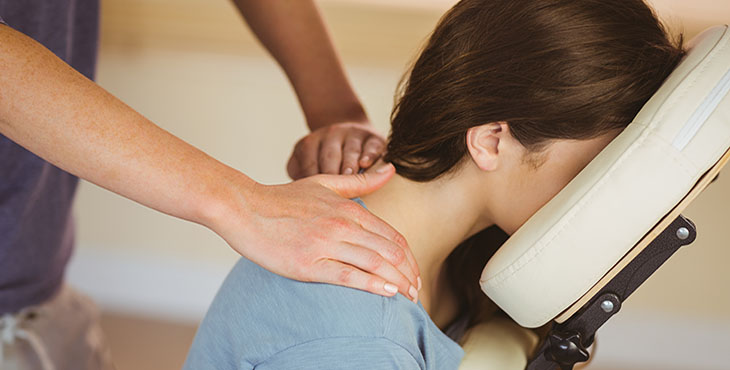
Massage therapy is performed by licensed massage therapists. It involves manipulating muscles and soft tissue in your body using various pressures and movements. Massage therapy is a form of relaxation that helps to ease stress, tension and other symptoms. It can also be used for healing injuries, supporting wellness, and pain relief.
Register now for the Amta 2022 Convention
Come join us at the AMTA 2022 National Convention, Cleveland, Ohio, August 25-27. We will be gathering as a community for learning, connecting, and getting inspired.
What are your hours of work as a massage therapist?
Massage therapists can work for a variety of hours. Be aware that your total time on the job will not be spent exclusively on what the massage profession calls contact hours--the time spent doing actual massage. You will also need to clean and sanitize your massage room/equipment and perform business-related tasks.
The American Massage Therapy Association conducted a survey in 2020 and found that massage therapists work an average of 27.2 hours per week. Results from the previous year were 26.6.

In-Person Information Sessions Will Be Held On The Following Dates:
- Tuesday July 5, at 12:30 p.m. in Union Hall 147
- Thursday, July 21 at 5:30pm in Union Hall 147
- Tuesday, August 2 at 12:30pm in Union Hall 147
- Tuesday, August 2, at 5:05pm in Union Hall147
Massage Therapy Application Form
Kay
What is your longest tenure as a Massage Therapist
- Since 1995
What type of massages do you specialize in?
What made you want to become a massage therapist?

Is Being A Massage Therapist A Good Career Choice?
Being a massage therapist has a number of career advantages. There's a growing demand for massage therapists. You also have more flexibility than other careers to make your career. You can also enjoy low stress work environments where it's rewarding to help others improve their health and wellbeing.
Let's take a closer look at the advantages of being a massage therapist.